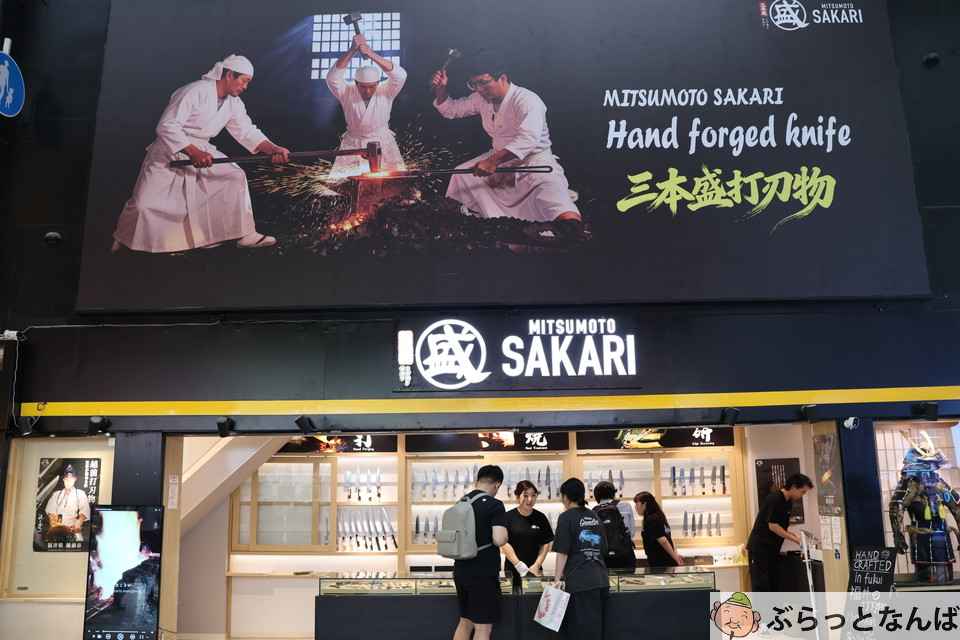
On August 21, 2026, "Mitsumotosakari," a knife specialty store dealing in Echizen Uchi Hamono, opened its first physical store in the Ebisubashisuji Shopping Street in Osaka. The store is lined with santoku knives that are easy to use at home, as well as gyuto knives, deba knives, petty knives, kitchen scissors, sharpening stones and more. From household knives in the 10,000-yen range to pieces over 100,000 yen showcasing artisan craftsmanship, you can actually pick them up and choose while checking the weight and grip.
We spoke with the store manager, Mr. Ozaki, about the history of knife-making that has been passed down in Echizen City, Fukui Prefecture, and how to choose the right knife for you.
We want to spread the appeal of Echizen knife blades in Osaka. We will carry on with the 150-year tradition and heritage.
Facing the Ebisubashisuji Shopping Street, the shop with a wide entrance has a bright and open layout that allows you to see inside from the street. It’s an atmosphere where even those who aren’t familiar with knives can easily stop by.
For "Mitsumotosakari", which has been selling mainly online until now, this is the first physical store. Here, you can actually hold the knife in your hand, check its weight and grip, and feel the texture of the blade.
The founder of "Mitsumotosakari" is Yasutaka Iida, the fourth generation of the Kirin Hamono knife brand from Echizen City. The Iida family has been making knives in Echizen for over 150 years, passing on their skills through the generations. Mr. Iida has also developed various techniques related to the forging and processing of knives and has obtained patents. In 2018, under the belief that "one path should be mastered and pursued throughout life," he launched the new brand "Mitsumotosakari."
When asked why they chose the Ebisubashisuji Shopping Street for their first physical store, Mr. Ozaki said the following.
"The main reason is that it's a shopping street familiar to people in Kansai. It developed as the approach to Imamiya Ebisu Shrine, home of the god of commerce, and the Kizu Market, where chefs shop, is also nearby. I thought it would be a good place for a knife shop. Also, Fukui is surprisingly close to Kansai: just over an hour by train, and about three hours by car. It's a distance where, given the right opportunity, people can actually visit Echizen. We hope to start by spreading Echizen knives from Kansai."
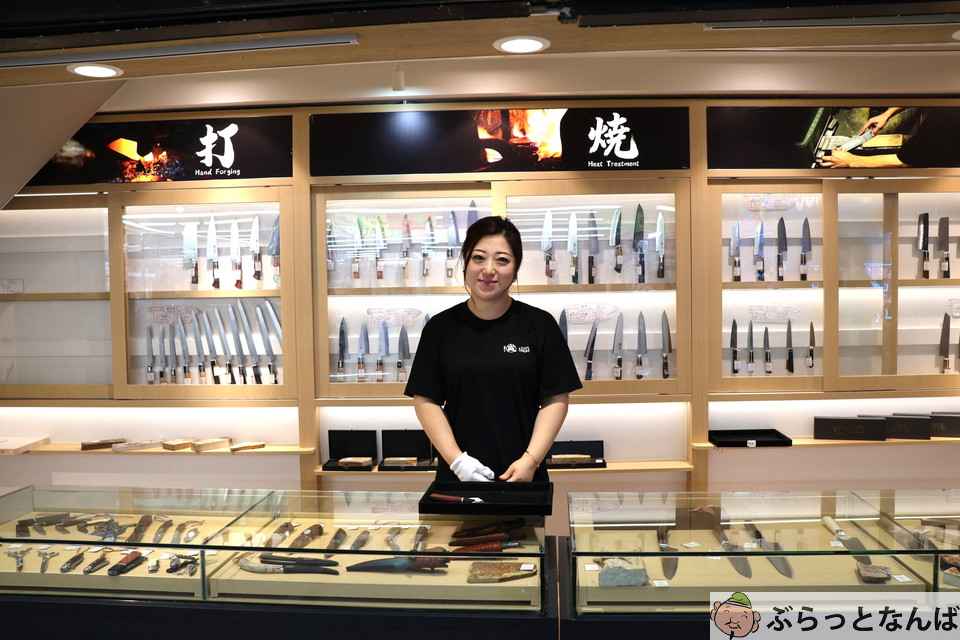
At the store, staff are asked about many things such as materials and how to care for knives, so to be able to answer any question, they reportedly underwent several days of training on steel materials, types of knives and their manufacturing methods, and the history of Echizen Uchi Hamono. They also have staff who can speak English, Chinese, and Korean, so this is a reassuring place for anyone, from first-time knife buyers to chefs looking for a serious knife.
About 700 years of history and craftsmanship of Echizen knife-making passed down
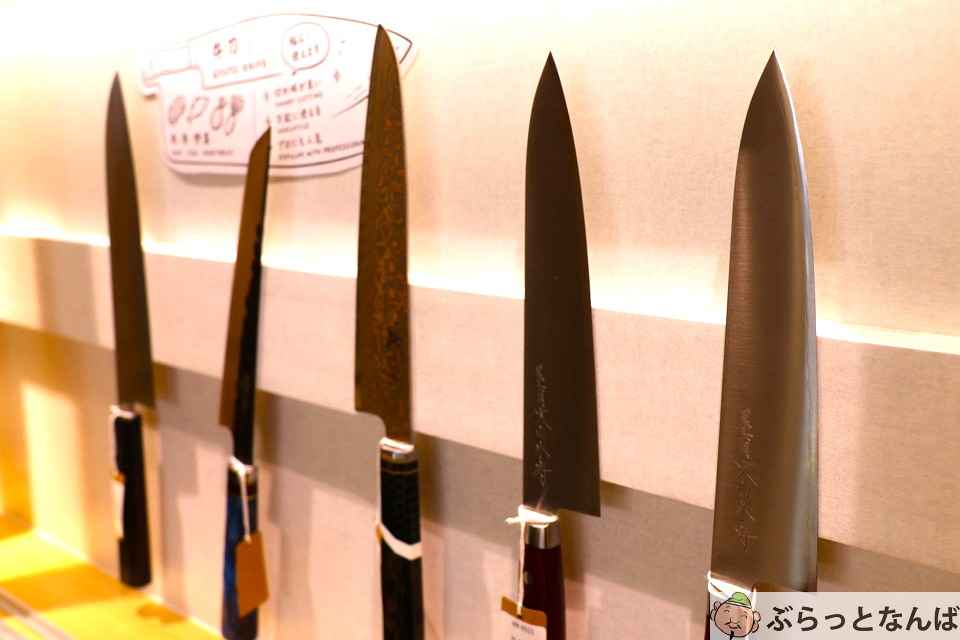
The technique of Echizen knife-making, which has been passed down for approximately 700 years, is embodied in the "Mitsumotosakari" knife. Its history dates back to the period of the Northern and Southern Courts.
It is said to have begun when the Kyoto swordsmith Chiyozuru Kuniyasu moved to what is now Echizen City in search of water suitable for forging swords, and, alongside making swords, made sickles for farmers. Later, Echizen sickles spread nationwide through lacquer-tapping craftsmen who traveled from region to region, and from the mid-Edo period to the Meiji period, this area developed into a major sickle-producing region.
Continuing to preserve Japan's ancient techniques of fire forging and hand finishing, in 1979 it became the first knife-producing region in Japan to be designated a national Traditional Craft. Today, its quality and beauty, centered on kitchen knives, are highly regarded both domestically and internationally.
It is commonly referred to as "Echizen Hamono," but its official name is "Echizen Uchi Hamono." A major characteristic is that skilled craftsmen repeatedly heat and forge the steel, then finish each blade individually.
One of the most characteristic techniques symbolizing Echizen Uchi Hamono is the unique method known as "two-sheet spreading." By overlapping two blades and striking them alternately from the front and back, the blade is simultaneously thinned and lengthened. This is the wisdom of artisans, born from years of experience, that makes it easier to thin and even out the blade by forging the two together. It is one of the traditional techniques that supports Echizen Uchi Hamono renowned for their excellent sharpness.
From santoku knives to deba knives for anglers—the one that suits your lifestyle and needs.
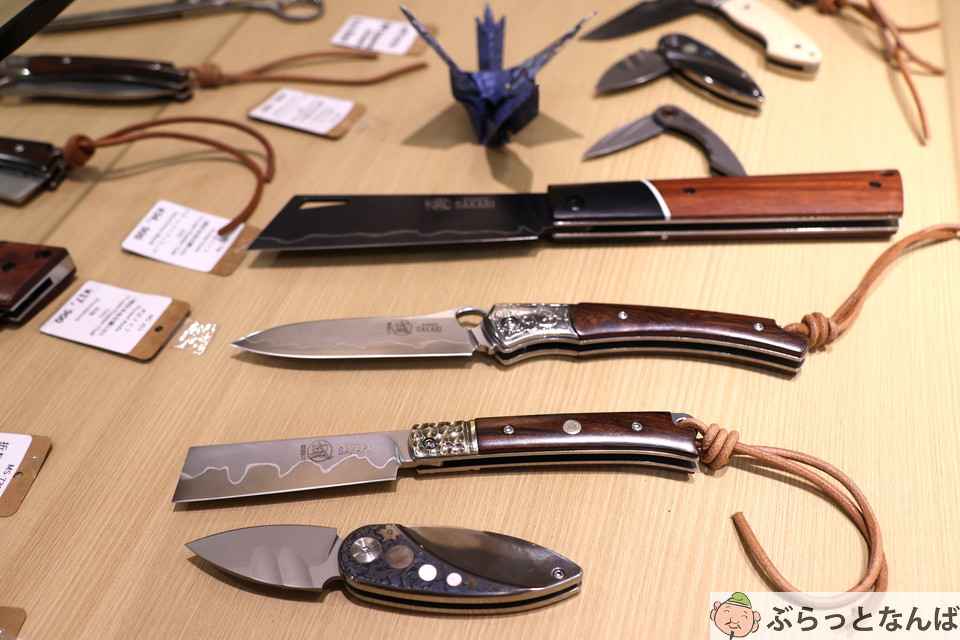
There are many reasons why people visit the shop to buy knives. What stands out to Mr. Ozaki is a woman who had kept using a knife she brought with her as part of her bridal trousseau for 20 or 30 years.
"She had been using it with great care, sharpening it all along, but the handle was damaged and the blade had become smaller from all the sharpening, so she came to the store thinking it was time for a new one. Having used it for so many years, she was well aware of the merits of a good knife."
It is also said that men who enjoy fishing in Osaka Bay and other places sometimes come to look for a deba knife to fillet the fish they have caught themselves. On the other hand, before choosing a full-fledged knife, some people also buy a paring knife or kitchen scissors first. "I think it's a good idea to try something that is easy to use first."
For those who are unsure about the type and material of a knife, the santoku knife is recommended as the first choice. It is called "santoku" (three virtues) because it can be used for a wide range of meat, fish, and vegetables, and is widely used in Japanese households. About the points to consider when choosing, Mr. Ozaki said the following.
"Having one at home is convenient. However, an expensive knife is not necessarily easy to use for that person. We have customers actually hold them to check the weight and the feel of the handle. Men and people from overseas tend to choose heavier knives. For Japanese women, lighter ones are popular."
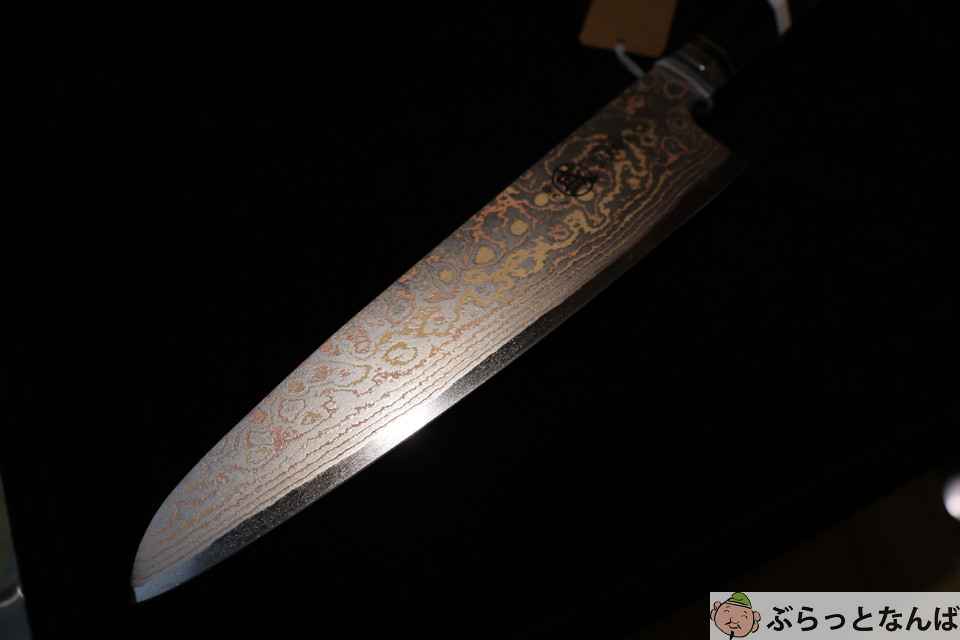
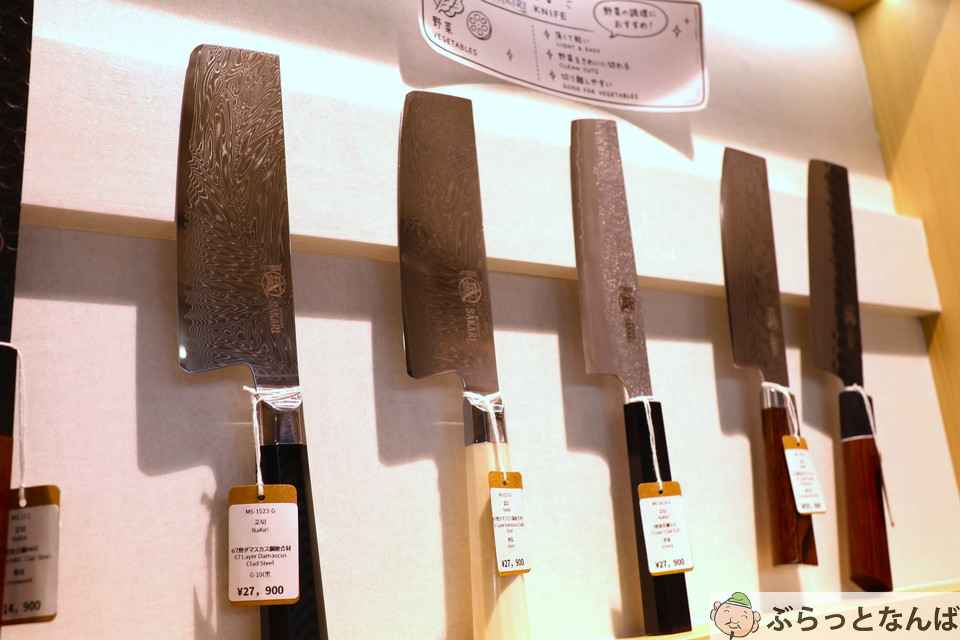
According to Ozaki, the Damascus knife is highly popular among travelers from overseas because it has a pattern resembling multiple waves on its blade. “People often ask me what this pattern means. The Damascus pattern is not drawn on later; it is created naturally through the overlapping of different materials. Not only is the sharpness of the knife impressive, but the beauty of the different patterns on each blade also captivates people.”
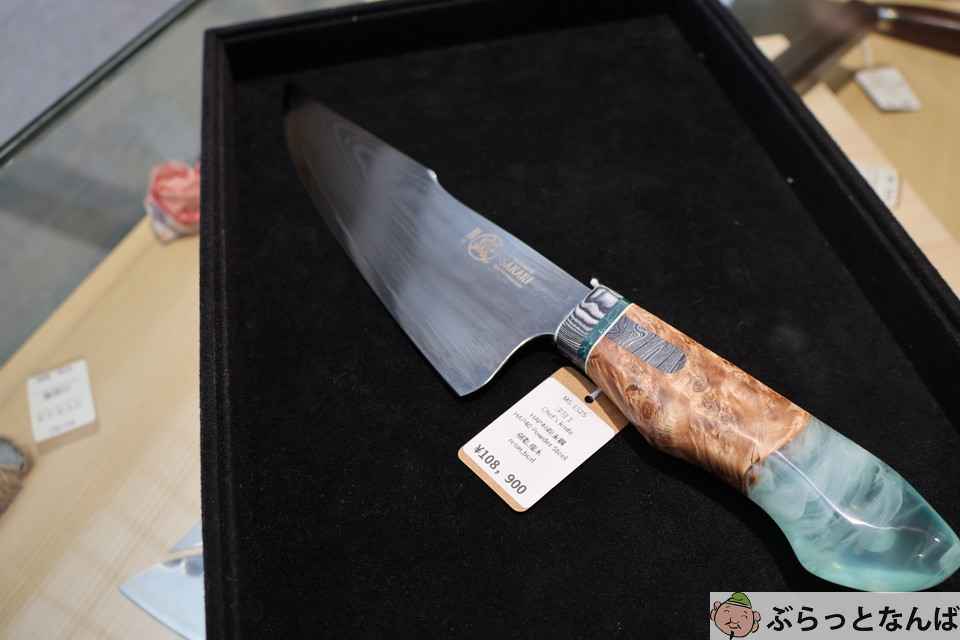
When it comes to high-end knives, materials such as buffalo horn, rare wood, and even mammoth tusk are used for the handle and ferrule. It is said that the buffalo horn version has the advantage of being less likely to get water inside and less prone to damage. As we continue to learn more about this topic, we are truly amazed at the depth of knowledge in the world of knives.
Even hard pumpkin slices are easily cut. The sharpness is truly felt when you use it.
Mr. Ozaki himself also started using the "Mitsumotosakari" knife at home, and he said that he realized the difference between it and the one he had been using before.
“The vegetables cut very easily, and the chicken is the one I notice the most difference in. I used to think the skin part was difficult to cut, but now it cuts easily. What I hear often from customers is that the hard pumpkin is now easier to cut. Although many people may cut pumpkins by heating them slightly in the microwave, a good knife for cutting will make the process much easier.”
The "Mitsumotosakari" allows you to choose the one that best suits your lifestyle by actually holding it in your hand. From the first knife you use every day to a new knife that replaces an old knife you've been using for years, you can consult with us about how to use it and your preferences. This is a unique feature of our physical stores.
Whether you want to replace your kitchen knife or are interested in the history of Echizen Uchi Hamono and the beautiful patterns on the blades, when you visit the Ebisubashisuji Shopping Street, be sure to stop by "Mitsumotosakari".
Store information
Store name: Mitsumotosakari Namba Main Store
Address: 3-2-26, Namba, Chuo Ward, Osaka
Business hours: 11:00 a.m. – 9:00 p.m.
Regular holidays: None
Phone number: 06-6760-4518
We deliver the latest information and useful tips and recommendations about Osaka Namba.