Osaka's Dotonbori is a popular tourist destination visited by many people from both Japan and abroad.
When it comes to the face of Dotonbori, the “Grisco sign” comes to mind, but where exactly is it located? How do you get there from the station? What kind of shops and tourist attractions are there around it? These are the questions we will address in this article.
Where are the signs of Griso located?
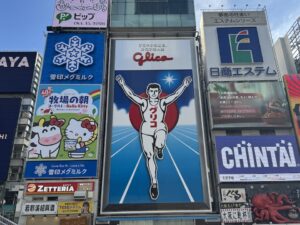
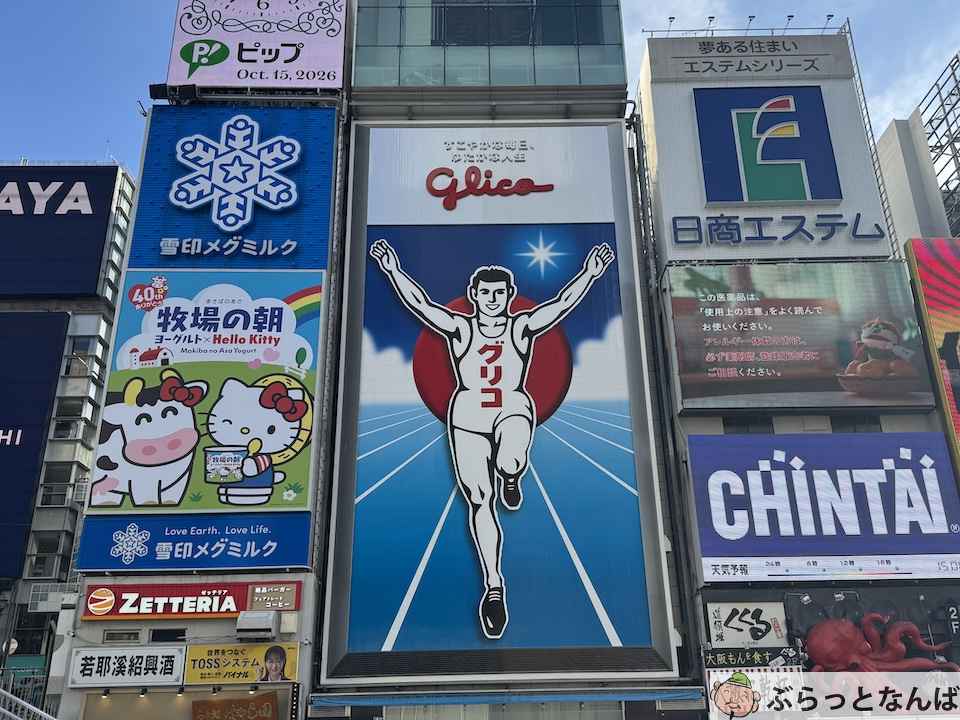
The Griso sign is located in Dotonbori, one of Osaka's top tourist destinations, and its official name is "Dotonbori Griso Sign."
People in Osaka divide the city into northern and southern parts; they call the area around Umeda "Kita," and the area around Namba "Minami," but Dotonbori is actually in the "Minami" area.
If you are interested, the article below introduces it, so please check it out.
In Dotonbori there is the Dotonbori River, which was dug as a canal during the Edo period.
The "Grinko sign" is displayed on the facade of the building, which stands on the banks of Ebisuba Bridge, which spans over it.
As you can see from the map, the Grisco sign will immediately catch your eye when you head from the north (Shinsaibashi) direction, but if you head from the south (Eishinbashi area), the sign will be hidden behind the building, so you might miss it and end up passing by without noticing!
In fact, I was once asked on Uryu Bridge, "Where is the Griso sign?"
On the bridge, we recommend taking a moment to look around.
Now, let’s introduce the history of the Glyco sign next, such as when the famous sign was first placed in Dotonbori.
The history of Glycosine
In 1935, Eiji Asagiri, the founder of the Japanese confectionery manufacturer Griso, took a keen interest in Dotonbori in Osaka, which is a place where 200,000 people pass through every day, and the history of the Griso sign began from where the neon tower was built.
Actually, Glico is a company headquartered in Osaka.
Glycosign of the past
The dioramas of the Glycosin series are located in Nishiyodogawa Ward, Osaka City.Ersa Memorial Museum of Ersa Griso Co., Ltd.You can actually see it there (Photo of the diorama provided by Eizan Griso Co., Ltd. Eizan Memorial Museum).
First generation (1935–1943)
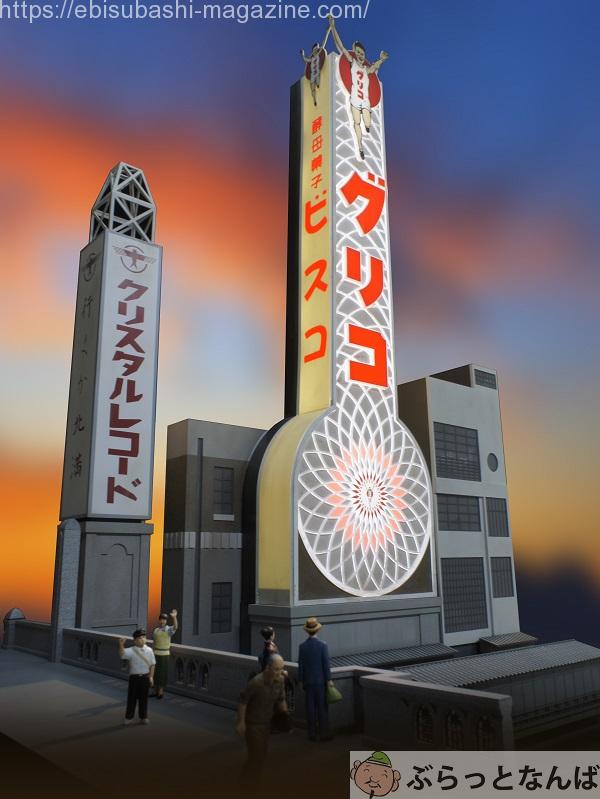
The first Grico Sign was a unique size among neon signs that were still rare at the time, measuring 33 meters in height.
Because of its size and rarity, it attracted a lot of attention and quickly became a famous sight in Minami (at that time, the runners' faces were very scary, which was also a characteristic feature).
Eventually, the situation in the Second World War became severe, and in 1943 it was dismantled to supply iron materials.
Second generation (1955–1963)
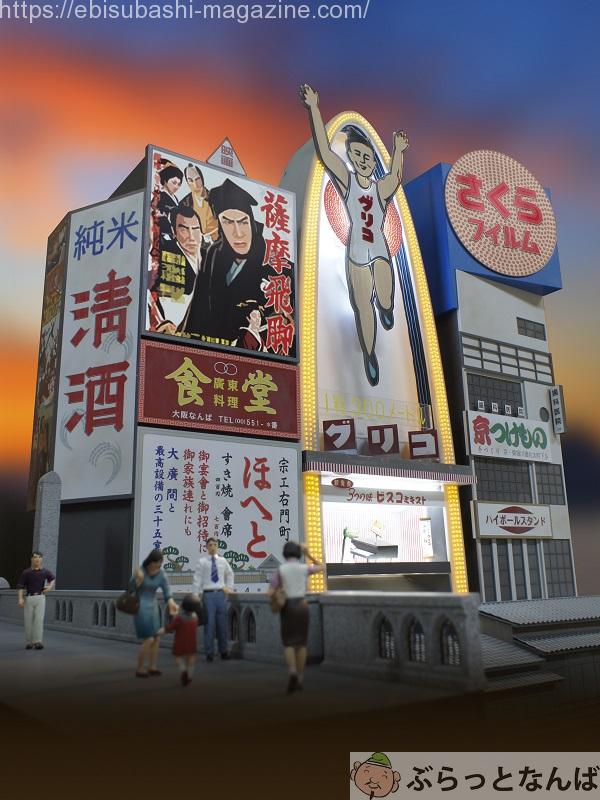
In 1955 after the war, the foundation of the first Grico Sign, which had been dismantled before the war, was used to rebuild the second Grico Sign.
Third generation (1963–1972)
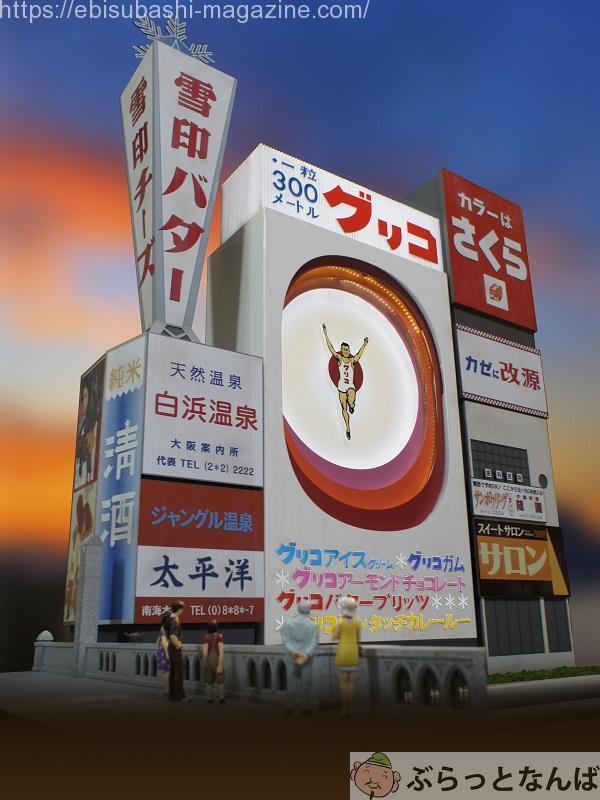
In 1963, the third generation of the Glycosin neon sign was transformed into an 18-meter-high fountain-shaped tower.
Twelve tons of water were sprayed from a waterwheel-shaped nozzle at the center of the Glyko Mark, and the beautiful rainbow patterns were created by the lights of twelve colors shining through the water.
Fourth generation (1972–1996)
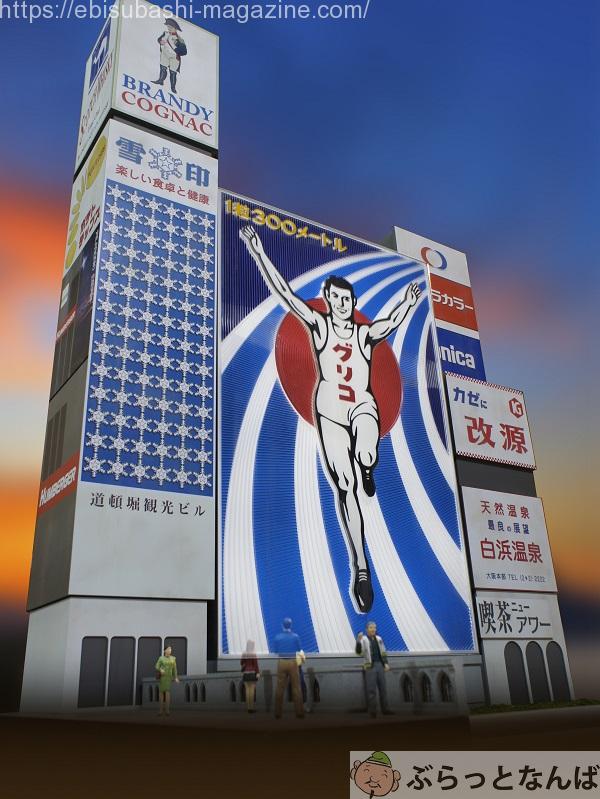
The fourth generation has a height of 17 meters, and by flashing the part of the athletics track that is in the background, it has become a dynamic geometric sign.
It appeared in movies and television and became a landmark symbol of Osaka, but was removed in 1996 due to renovations to the adjacent building.
Fifth generation (1998–2014)
Two and a half years after the removal of the fourth generation, the fifth generation Grisco Sign returns to Dotonbori.
The fifth generation is 20 meters high.
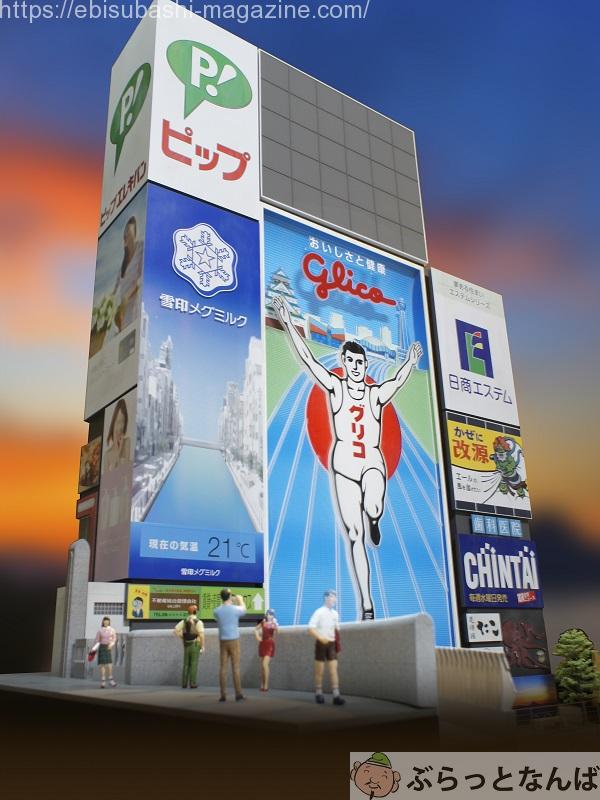
The runners running on the athletics track are shown with the four representative buildings of Osaka (Osaka Castle, Umezaikan, Tojinji Temple, and Osaka Dome) in the background, and the background color changes according to the time of day—morning, noon, evening, and night—to represent the runner running through Osaka over the course of a day.
In April 2003, "Dotonbori Grico Sign" was registered as a urban landscape resource (designated as a "Wakan Machi Nicospot" under the Osaka City Urban Landscape Regulations).
6th generation (2014 – present)
The Glycosign currently displayed is the sixth generation.
The size is the same as the 5th generation model: 20 meters high. It follows the design of the 5th generation model, with the goal finish mark floating on a blue background.
There are 140,000 LED light bulbs used in the lighting system.
From 30 minutes after sunset until midnight, the background changes not only in Osaka but also in various countries around the world, so you can see a different view from that of the day.
Furthermore, by making the sign itself resemble a large LED display, it became possible to display various images, and various celebrities have appeared on the Graco sign.
*The current design of the sixth generation has been renewed due to the aging of the equipment. It will be retired at the end of November 2026, and construction will begin in December. The seventh generation is scheduled to debut in spring 2027.
Famous people who appeared in Grikoshin
Actress Ayase Haruka (2014)
When the fifth generation of Glico Sign was renovated due to its aging, a banner featuring Haruka Ayase, who appears in Glico advertisements, was displayed as a runner.
In the autumn of that year, advertisements for the giant corn that would be featured in the show were displayed all over the place.
Racing driver Sato Takuma (2017)
A special video has been released to commemorate the victory of racing driver Sato Takuma, who is sponsored by Griso, in the Indy 500.
Recommended sightseeing information in the area
Kani Gourmet Tokonomae Main Store
Opened in 1962.
This is also a specialty shop for kani dishes, featuring a giant moving crab sign that is famous as a symbol of Osaka.
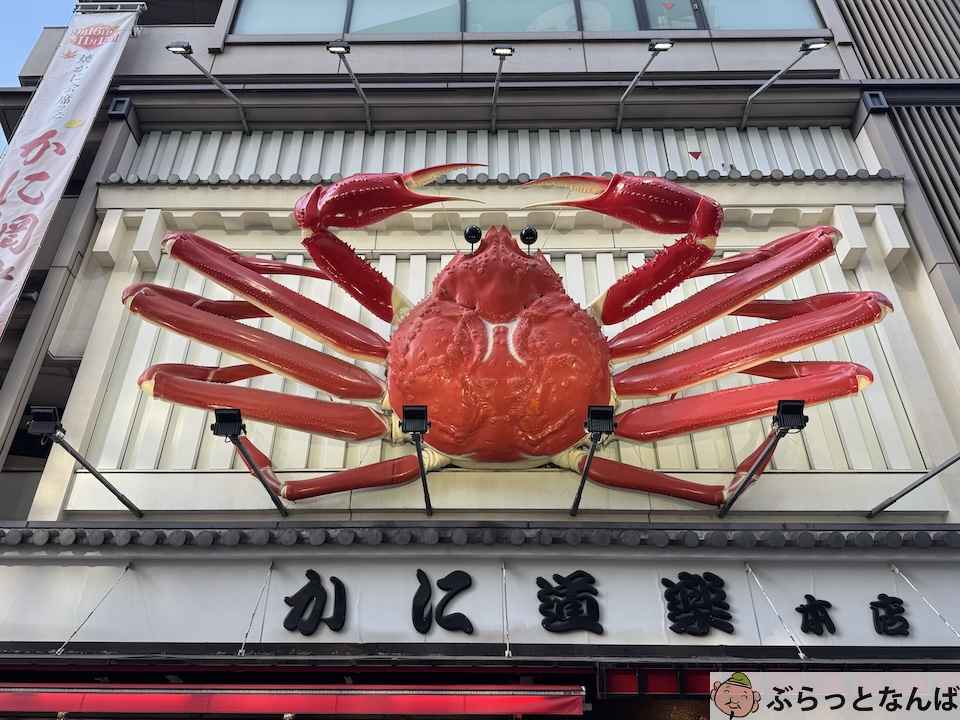
While some may think "that's quite expensive..." when hearing about crab dishes, you can also enjoy a little luxury with special menus such as the lunch crab set and other specialties. For a smooth check-in, please make a reservation online or by phone.
By the way, in addition to the main store, there is also the Dotonbori Chuo Store and the Dotonbori Higashi Store in Dotonbori. If you’re interested, you might want to check those out as well.
Shop name: Kani Doro Tojodono Honkan
Address: 1-6-18, Dotonbori, Chuo Ward, Osaka (right next to Eishinbashi)
Opening hours: 11:00–23:00 (last entry at 22:00)
Regular holidays: New Year's Eve (December 31st)
Phone number: 06-6211-8975
Kani Doro Official Website
Chokozukare Building
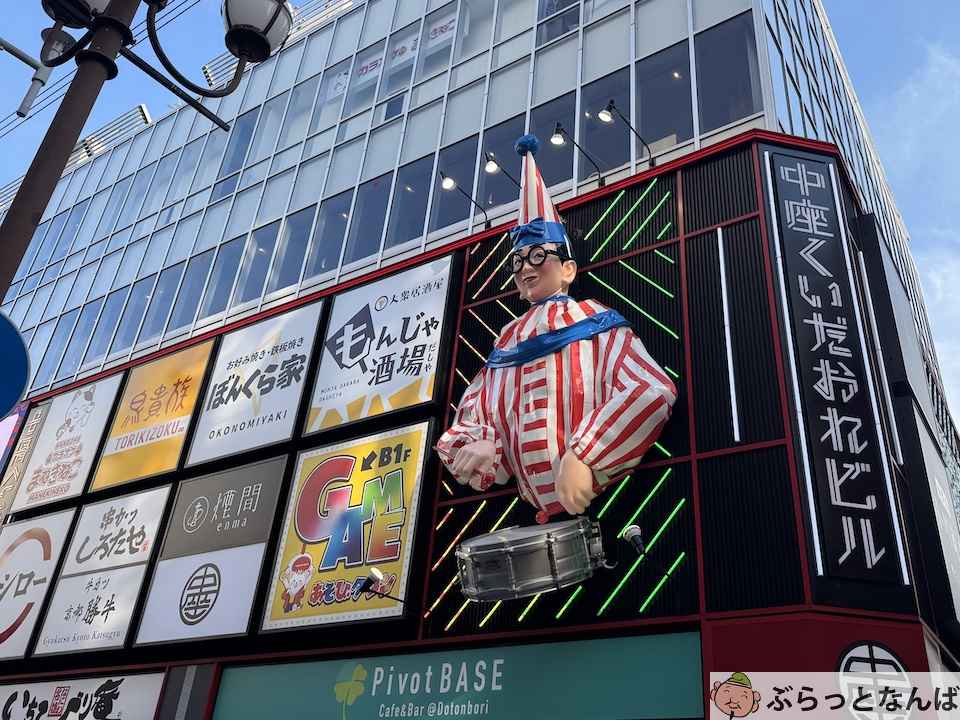
This amusement building houses "Kidouren Taro," Osaka's signature mascot alongside Glico, just near the Kani Road.
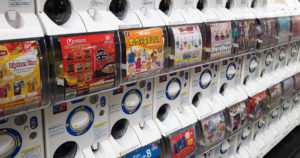
In addition to gourmet dishes such as okonomiyaki and skewer cuisine, there are also British-style pubs, shops where you can enjoy shisha, amusement facilities such as karaoke, games, and capsule toys, and entertainment facilities such as Yoshimoto Dotonbori Theater on the 6th floor and GIRAFFE Japan on the 5th floor.
Facility name: Nakazato Kiyodare Building
Address: 1-7-21 Dotonbori, Chuo Ward, Osaka
Kiedo Building Official Website
Dotonbori Konamon Museum
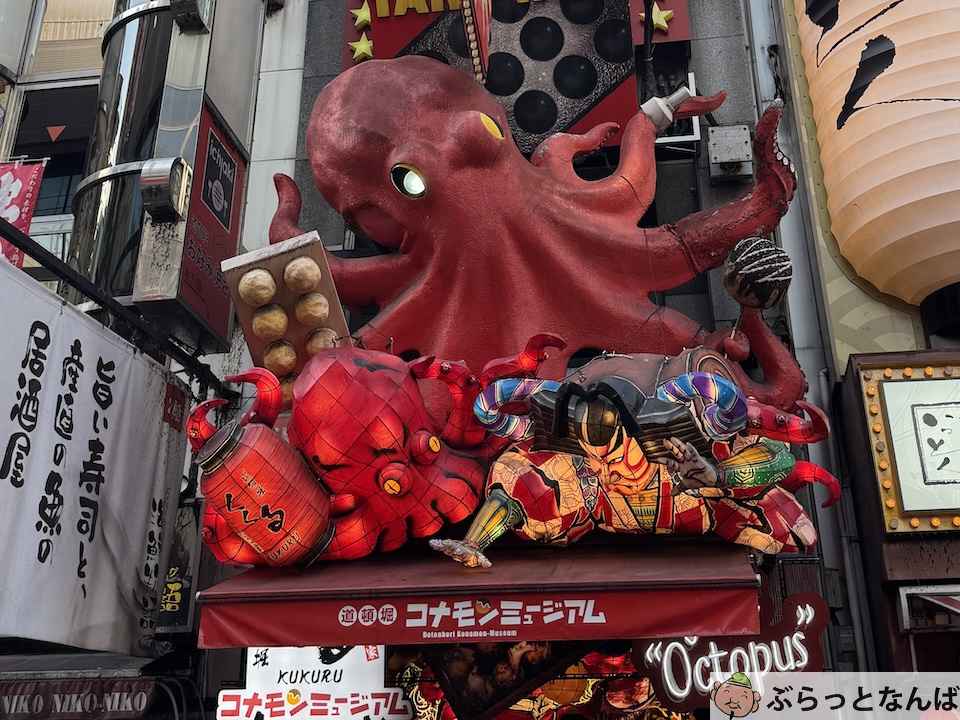
Takoyaki, okonomiyaki, yakisoba... Osaka is known as the holy place of Konamogume!
This is a konamon food theme park where you can enjoy and experience the culture of konamon. The "Nebuta-ko" sign (Nebuta + Tako) from the original Aomori nebuta master is also a highlight.
▼ Floor configuration
Ground floor underground / Takoyaki Dojo Kukurakuza
Learn how to make takoyaki from the master craftsmen at the famous takoyaki shop Kukuru! You can learn the whole process from scratch.
1st and 2nd floors / Takokai Dotonbori Kuru Dotonbori Konamon Museum Store
The hot, fluffy tempura is freshly made! You can enjoy authentic tempura made with the traditional ingredients.
If you learn about Konamon from the exhibits in the eat-in space, you might become a Konamon doctor!
3rd floor: Original Takoyaki and food sample making experience
You can experience a sample of the food-making process (royo), which has supported the food culture of Osaka, the city of culinary delights.
Name of facility: Dotonbori Konamon Museum
Address: 1-6-12, Dotonbori, Chuo Ward, Osaka
Business hours: Mon–Fri 10:30–22:30, Sat, Sun, and holidays 9:00–22:30
Phone number: 080-9062-3080
Fees: Admission is free
*Each experience requires reservations and additional fees apply.
Dotonbori Konamon Museum Official Website
Don Kihote Dotonbori Store "Dotonbori Grand Ferris Wheel Ebisu Tower"
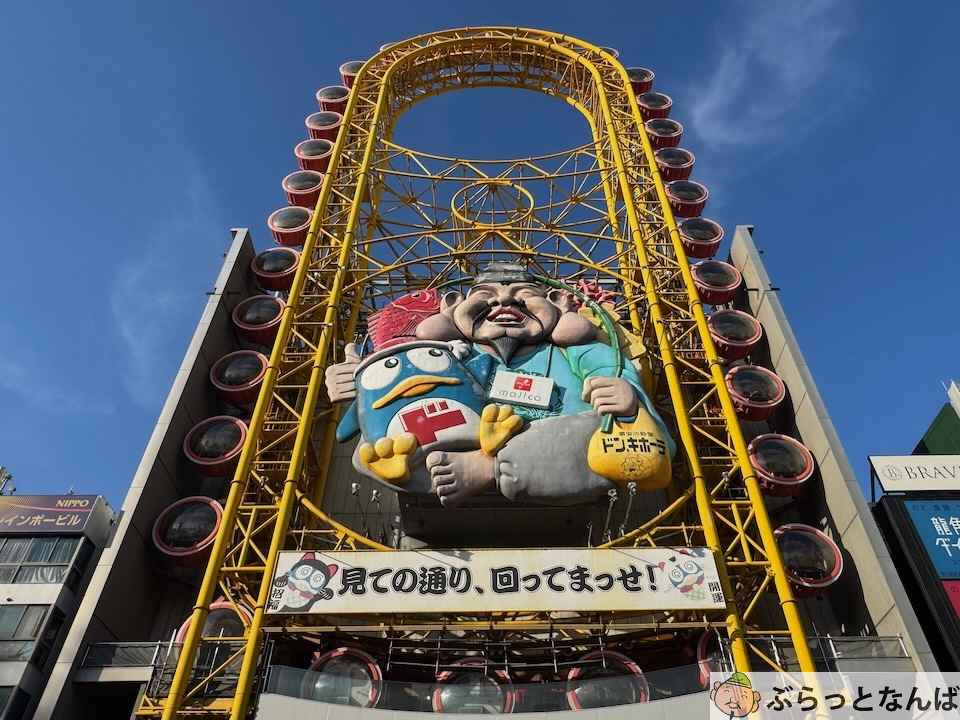
The Don Kihote Dotonbori store has a long-cylindrical Ferris wheel called the Ebisu Tower that is unlike anything else you have ever seen. In fact, the long cylindrical shape and the gondola that rotates horizontally are the world's first Ferris wheel.
Why not enjoy the view of the Dotonbori area from the sky for about 15 minutes?
*Due to weather conditions and emergency maintenance, operating hours may change or be suspended. For more information regarding the status of the service, please contact us by phone.
Facility name: Don Quijote Dotonbori store "Dotonbori Grand Ferris Wheel Ebisu Tower"
Address: 7-13, Zunyoemoncho, Chuo Ward, Osaka City, Osaka Prefecture
Business hours: Mon-Fri 11:00-22:00 (last boarding time 21:30)
Wednesdays and Sundays 11:00–22:30 (last boarding time 22:00)
*Due to maintenance every Tuesday, the service will not start until 13:00.
(If Tuesday is a holiday, Wednesday will be a maintenance day.)
Phone number: 070-1550-9021
Dotonbori Ferris Wheel Ebisu Tower Official Website
Local residents' recommended shooting spots
Eishibashi
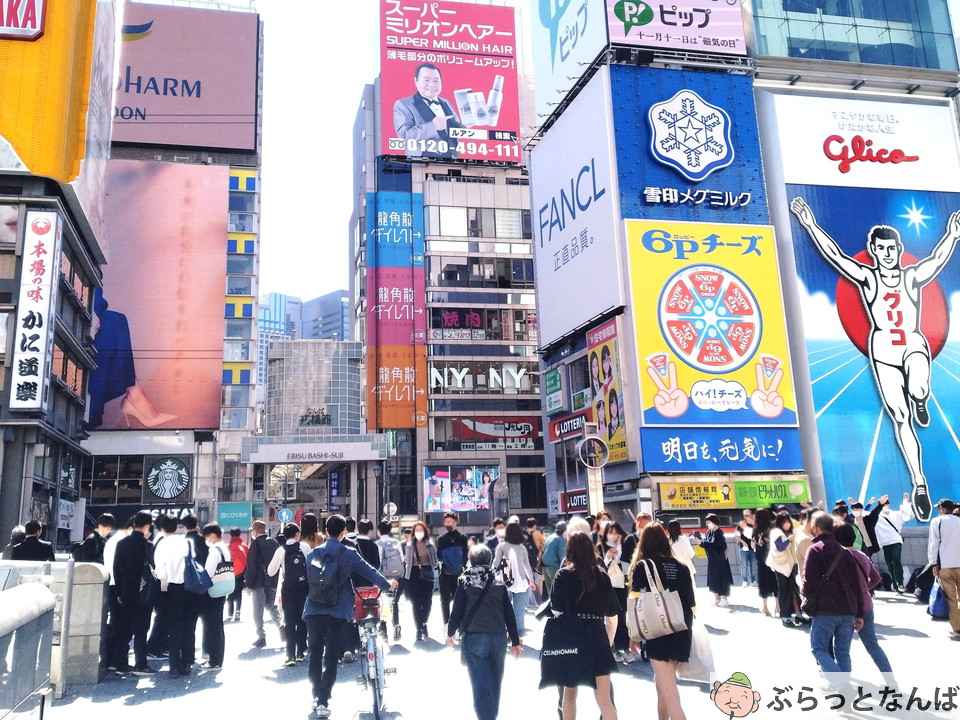
The Eishinbashi Bridge, which marks the boundary between the Shinsaibashi Shopping Street and the Eishinbashi Shopping Street, is always bustling with many passersby.
If you want to take photos without worrying about the crowds, we recommend going early in the morning.
Most of the nearby stores open at 11:00 AM, so if you go before that, it’s usually empty.
Tombori River Walk
The promenade along the Dotonbori River is called the "Tonbori River Walk."
Why not take a photo with the Glycosine sign in front of you, or visit one of the delicious restaurants along the river? Taking a walk by the river in the middle of the city is a great way to spend your time.
Tombori River Cruise
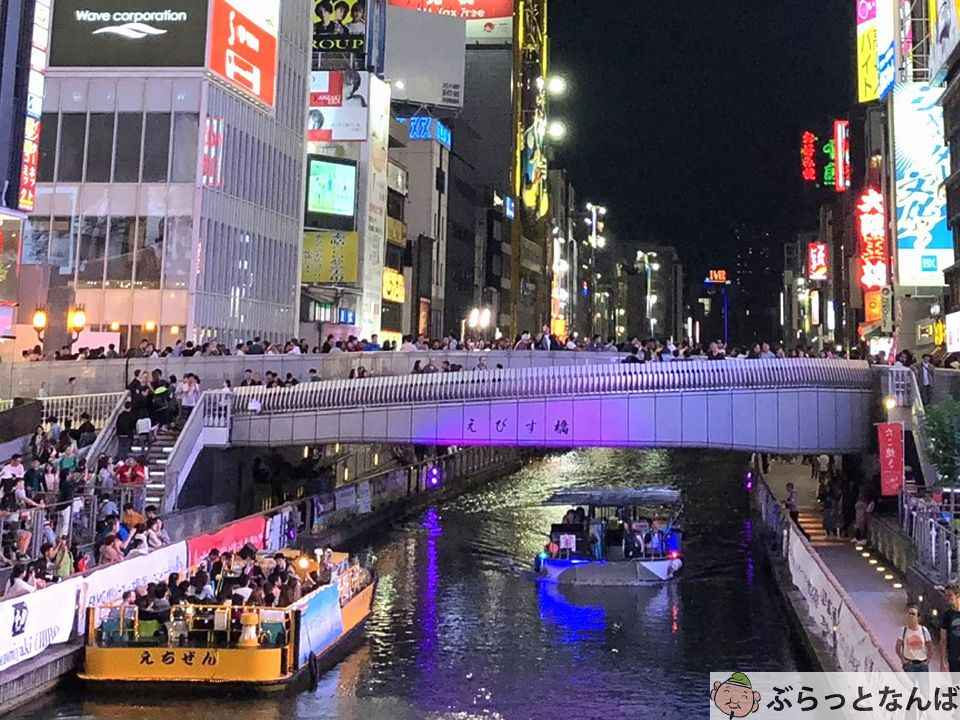
There are sightseeing boats operating on the Dotonbori River. On a mini cruise of about 20 minutes with a guide, you stop at Glico before taking a photo time. Due to safety reasons, you cannot get up from your seat, but it is highly recommended because you can take photos up close. You can experience unique experiences on the boat, such as waving to the people on the bridge and going under Nihonbashi, Eishinbashi, and Dotonbori Bridge.
Detailed information
Prices: Three types: adult, student (middle school and high school students, university students, and those with student ID), and child (elementary school students).
* Children under elementary school age are free with one adult. From the second child onwards, the "Child" fee is required.
Time required: Approximately 20 minutes
Opening hours: 11:00 AM to 21:00 PM. Departures every hour at 00:00 and 30 minutes thereafter.
*It may be cancelled due to weather, sea conditions, or tide levels.
Official website
More information about Glycosine
Facility name: Dotonbori Grico Sign
Address: 1-10-2 Dotonbori, Chuo Ward, Osaka City, Osaka Prefecture
Light on/off time: lights on 30 minutes after sunset, lights off at 24:00
[Reference] Sunset time in Osaka Prefecture
Access: 3-minute walk from Exit 14 of Namba Station on the Subway Midosuji Line
Summary
The Dotonbori Graco sign, which is a symbol of Osaka, is definitely one of the must-see spots.
It’s a tourist spot, so it’s crowded, but it’s definitely worth a visit!
There are also other unique giant signs and delicious food around the area, so please take a stroll and enjoy it.
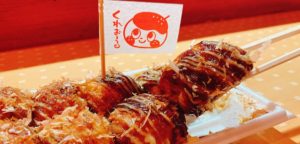
For those who are concerned about gourmet food, here is the solution.
For those who want to enjoy sightseeing without bringing anything with them, here is the place to go.
We deliver the latest information and useful tips and recommendations about Osaka Namba.